Odido - Designing a Cohesive Digital Foundation
Client
Role
Odido
Design System
Summary
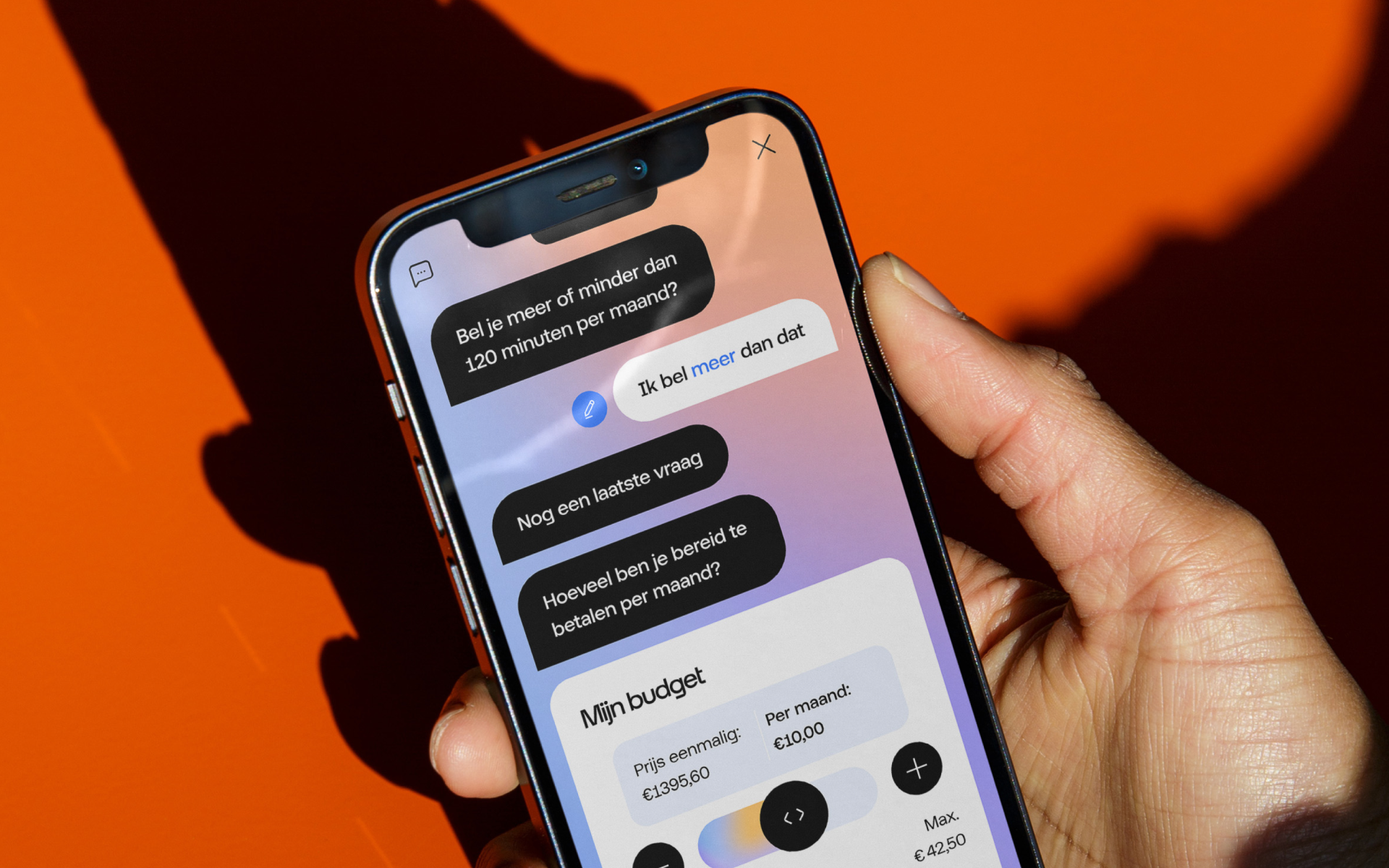
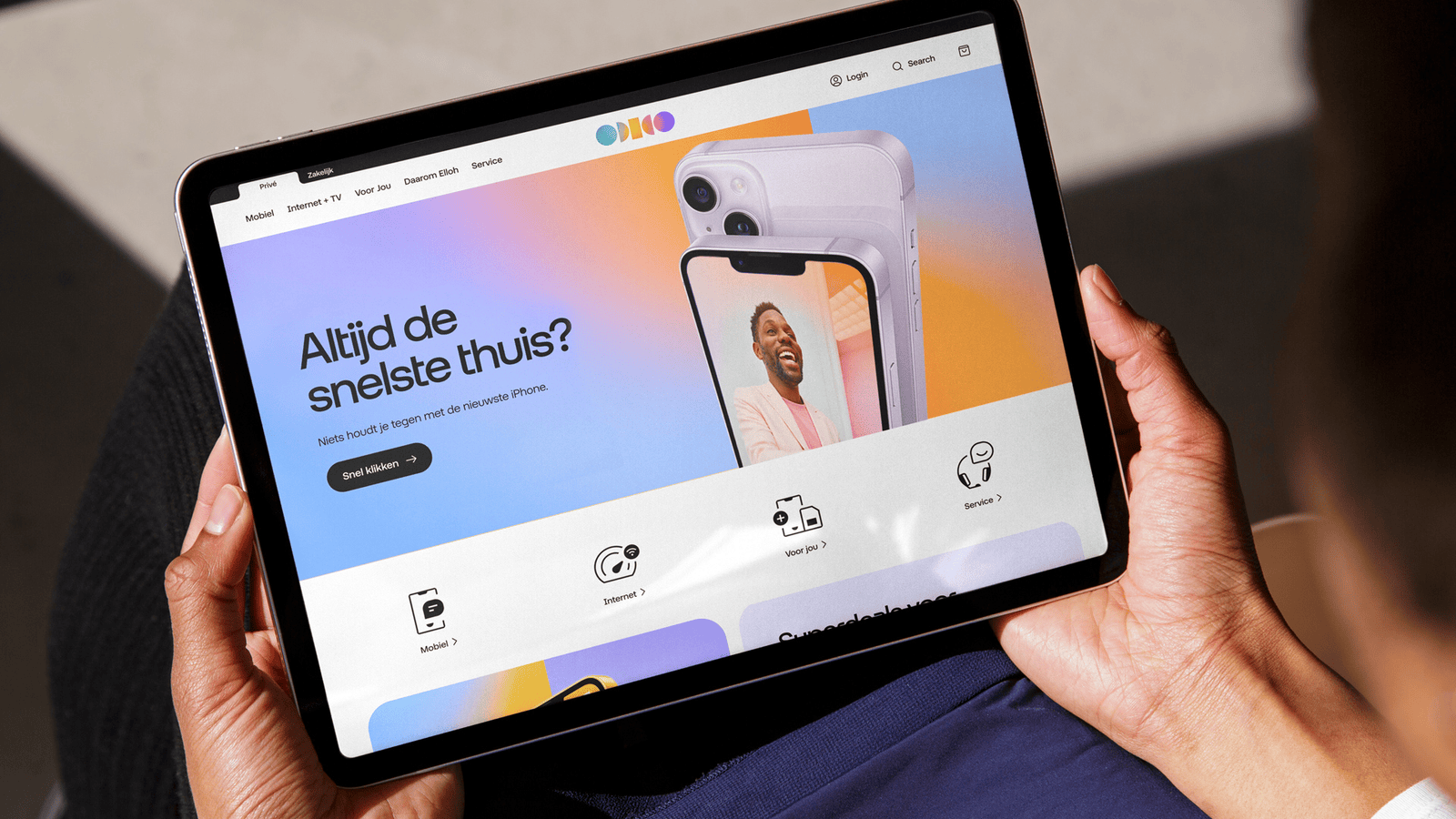
Odido is a major telecom provider in the Netherlands, launched as part of a large-scale brand transformation from T-Mobile. This transition required a completely new digital foundation that could support the brand across hundreds of digital touchpoints, including apps, websites, retail, and marketing channels.
As part of a multidisciplinary design team, I contributed to setting up the Odido design system. The goal was to translate the new brand identity into a scalable and consistent digital system that could be used across platforms and teams. The design system became the foundation for creating unified digital experiences and supporting the rollout of the new brand across a wide range of products and services.
Challenge
The transition to Odido introduced a completely new brand identity that needed to be applied consistently across a large number of digital touchpoints. This included mobile apps, websites, communication platforms, and marketing assets. Creating consistency at this scale required more than visual updates. It demanded a robust and flexible design system that could be adopted by multiple teams and integrated into existing workflows.
Another challenge was translating the brand’s core values into a usable digital language. The new brand emphasized human connection, clarity, and accessibility, which needed to be reflected in colors, typography, motion, and component behavior. These values influenced every aspect of the system, from interaction patterns to visual styling.
Additionally, the system needed to be scalable and easy to implement. Multiple teams were working in parallel, which required clear documentation, reusable components, and consistent guidelines to ensure alignment across products and platforms.
Solution
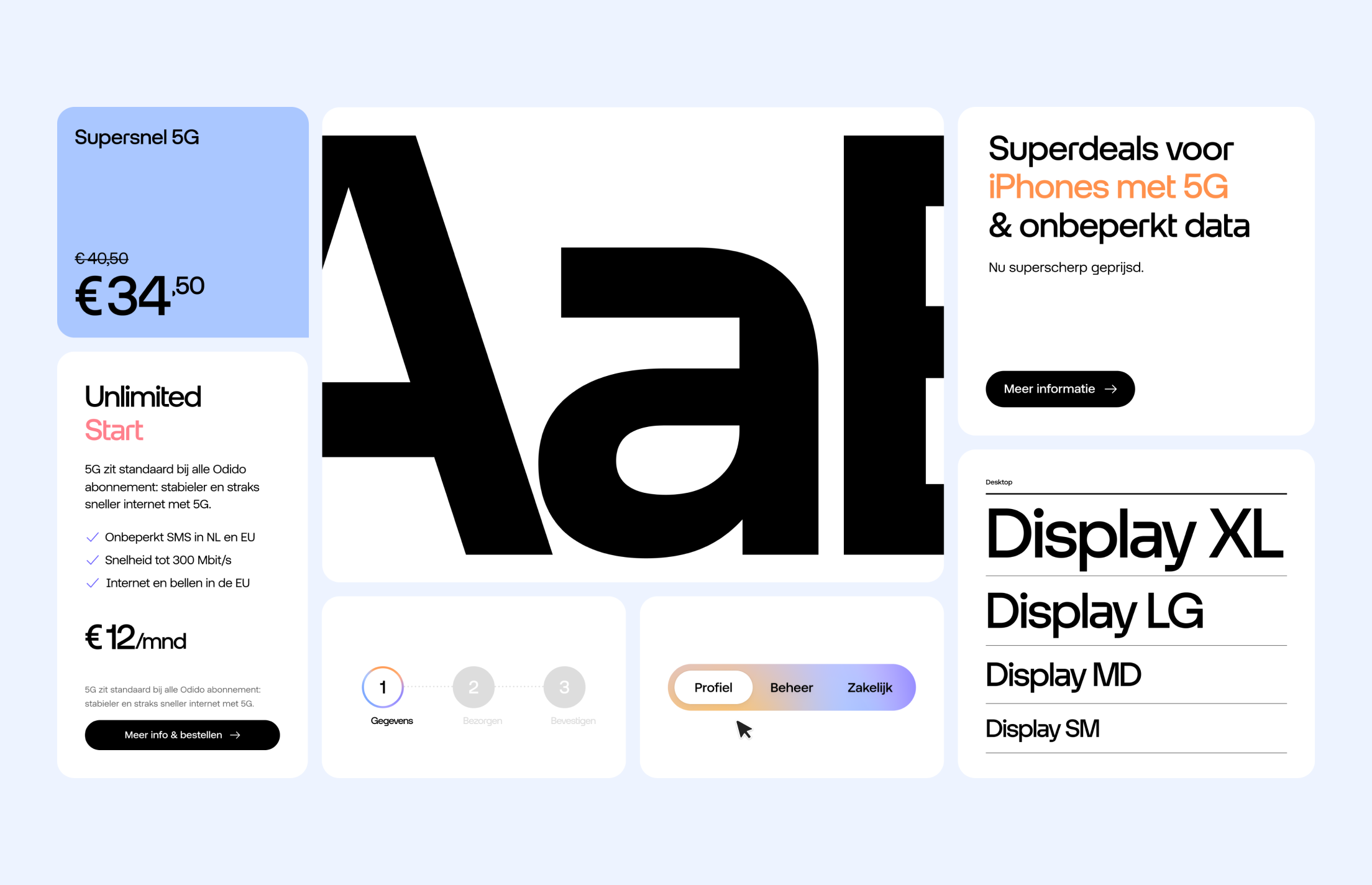
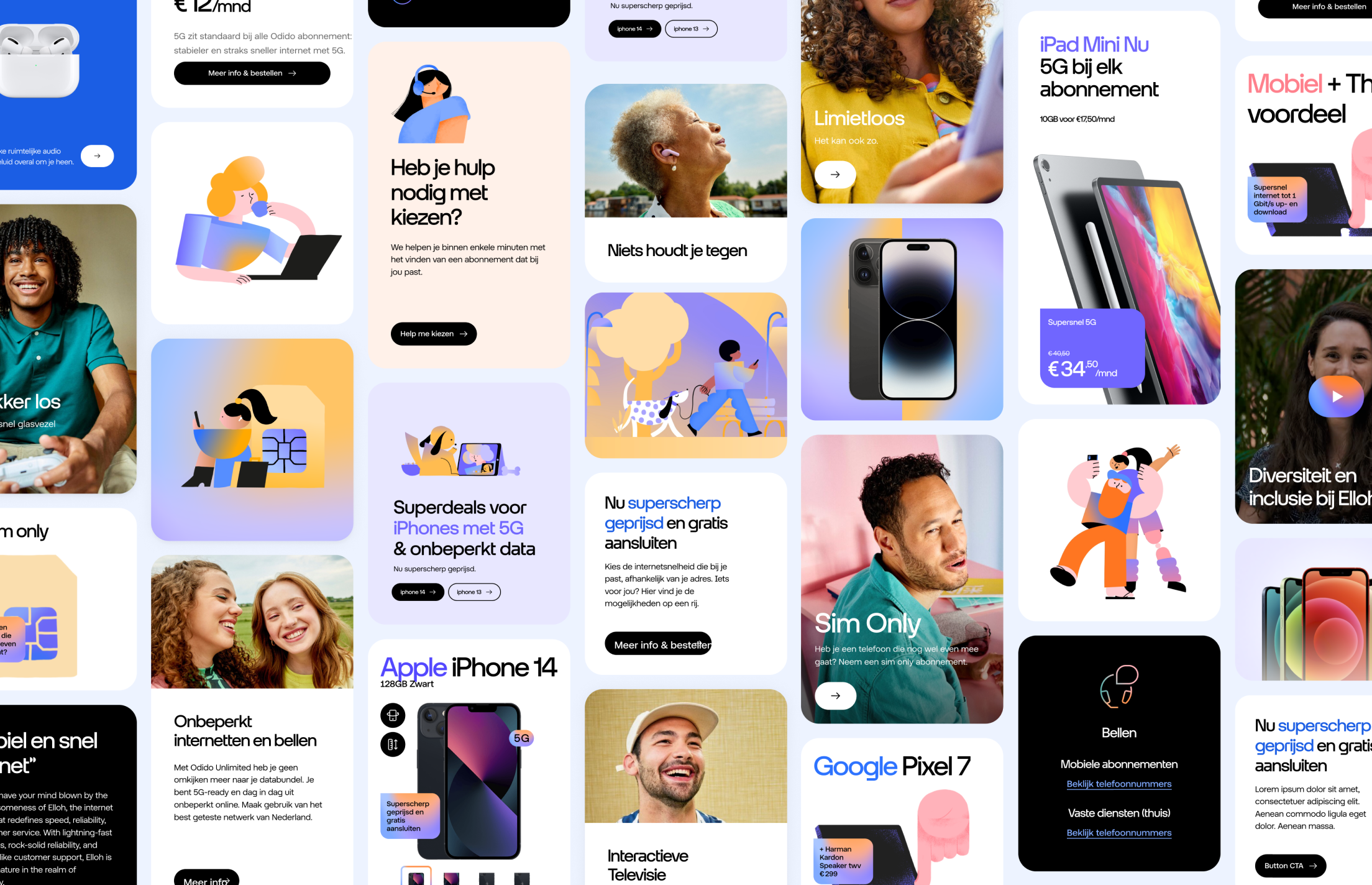
Working closely with designers and developers, we created a scalable design system that translated the Odido brand into a practical and reusable digital toolkit. This included defining visual foundations such as color usage, typography, iconography, and layout principles, as well as building a library of reusable UI components.
The system was designed to support multiple platforms, ensuring consistency across mobile, web, and other digital channels. Components were structured to be flexible and adaptable, enabling teams to implement the design system efficiently while maintaining visual consistency. The distinctive visual language, including signature shapes and motion elements, helped create a recognizable brand experience across all touchpoints.
By establishing a shared visual and interaction framework, the design system enabled teams to work more efficiently and deliver consistent user experiences at scale. It became a foundational layer supporting the rollout of the Odido brand across a wide range of digital products and customer touchpoints.